Remote work is no longer an exception. For many professionals, working from home at least part of the time is now simply how work is done. The shift happened fast, but the questions it raises are not simple: Is working from home actually better? What does it cost you? And when does it stop making sense?
The honest answer is that it depends. The advantages of working from home are real. So are the disadvantages. This article examines both sides — including some that most guides overlook — so you can make a clear-eyed assessment of what works for your situation.
Advantages of Working From Home
1. Lower Costs
Working from home eliminates or significantly reduces several daily expenses:
- No commute costs (fuel, public transport, parking)
- No daily lunch or coffee spend outside the home
- No work wardrobe requirements to the same degree
For employees, this amounts to a meaningful reduction in the cost of working. For freelancers and small business owners, the saving on office rent is even more significant. Operating without a leased commercial space reduces fixed overhead to nearly zero.
2. Time Back from Commuting
The average commute is time spent that produces no output. Working from home returns that time — whether it is 20 minutes or two hours per day — to be used however the individual chooses. For some people, that means more sleep. For others, it is exercise, family time, or an extended working day by choice. The impact compounds over a week, a month, a year. It is one of the most concrete quality-of-life improvements that remote work offers.
3. Flexibility and Autonomy
Working from home gives you control over your schedule in a way that an office rarely does. If you work best in the early morning, you can start at 6am. If you are more productive in the evening, you can structure your day accordingly. If you need to attend a personal appointment mid-morning, you can do so without negotiating leave.
For people who manage their own time effectively, this autonomy is one of the most valued aspects of remote work. It allows work to fit around life rather than the other way around.
4. Focused Work Environment
For solo, deep-focus work — writing, coding, analysis, creative thinking — a quiet home can be more productive than an open-plan office. You control the noise level. You control the interruptions. You can create conditions for sustained concentration that are difficult to achieve in a shared workspace.
This advantage is real, but conditional: it depends on having a home environment that is actually quiet and distraction-free, which not everyone has.
5. Reduced Daily Friction
Small daily frictions in an office environment — a slow lift, a full car park, a kitchen queue, a colleague who needs five minutes — add up. Working from home removes most of them. The start of your working day begins when you sit down, not when you arrive.
Disadvantages of Working From Home
1. Social Isolation
The most commonly cited disadvantage of home working is isolation. Human beings are built for social contact, and the incidental interactions of office life — the conversation in the corridor, lunch with a colleague, the informal knowledge-sharing that happens in a shared space — do not happen when everyone is at home.
Over time, isolation affects mood, motivation, and the quality of thinking. It is one of the reasons many people who initially celebrated working from home later find themselves returning to offices or coworking spaces — not for the infrastructure, but for the people.
2. Motivation Without External Accountability
In an office, the presence of other people working creates a baseline accountability. At home, that external structure is absent. Some people manage this effectively through self-discipline. Others find that without colleagues nearby, deadlines to meet in front of others, or a manager in the same room, they lose momentum.
This is not a character flaw — it is a practical reality about how motivation works for many people. The solution is to build external accountability deliberately: regular team check-ins, shared project tracking, or a working environment where other people are present.
3. Blurred Work-Life Boundaries
The flexibility of working from home can become its own trap. When your office is also your home, the boundary between the two becomes unclear. Work bleeds into evenings. The laptop stays open after dinner. A Sunday afternoon turns into “just checking emails.”
Over months and years, this erodes recovery time. Without deliberate boundaries (fixed working hours, a dedicated workspace, a shutdown ritual), home working can become a situation where you are technically always at work.
4. Equipment and Resource Limitations
Most home workers operate with a laptop and whatever peripherals they own personally. Compared to a well-equipped office, this is typically a step down: slower internet at times, no second monitor, no dedicated phone line, no printer, no access to specialised equipment or software maintained centrally.
For knowledge workers whose primary tool is a laptop, this gap is small. For roles that depend on specialised hardware or physical resources, working from home creates real limitations.
5. Team Coordination Challenges
When a team is distributed across different locations, questions that would take 30 seconds to resolve across a shared desk require a message thread or a scheduled video call. Responses take longer. Miscommunications happen more easily when tone and body language are absent.
Teams that manage this best tend to invest deliberately in communication systems and clear norms about availability. But even with good tools, some types of collaboration are harder at a distance.
6. Career Visibility for Employees
For people employed in organisations, home working carries a risk that is rarely discussed: being less visible to managers and decision-makers. “Out of sight, out of mind” is a real phenomenon in promotion and project allocation decisions. People who are physically present tend to be noticed more often, asked to lead more things, and considered first for opportunities.
Remote workers need to be more intentional about maintaining visibility — through regular communication, showcasing output, and building relationships despite the distance.
7. No Professional Business Address
For freelancers and small business owners, working from home raises a practical problem: your home address becomes your business address by default.
Using a residential address for company registration, banking, and client correspondence is not always appropriate. It can raise questions with banks, create issues with certain licence applications, and may not reflect the professional image you want to project.
A Business Presence package from SOHO provides a registered Malta business address that can be used for company registration, official correspondence, and banking purposes — without renting a physical office. The Business Presence plan (from €75/month) includes address use, mail handling and a Certificate of Incumbency, which is required for certain banking and compliance processes.
Finding the Right Balance: Alternatives to Full-Time WFH
The choice is rarely as binary as “work from home or go to an office every day.” Most people settle into an arrangement somewhere between the two.
If the disadvantages above are starting to feel familiar — isolation, motivation dips, boundary blurring — it may be worth considering a partial move to a coworking space rather than trying to engineer a complete solution at home.
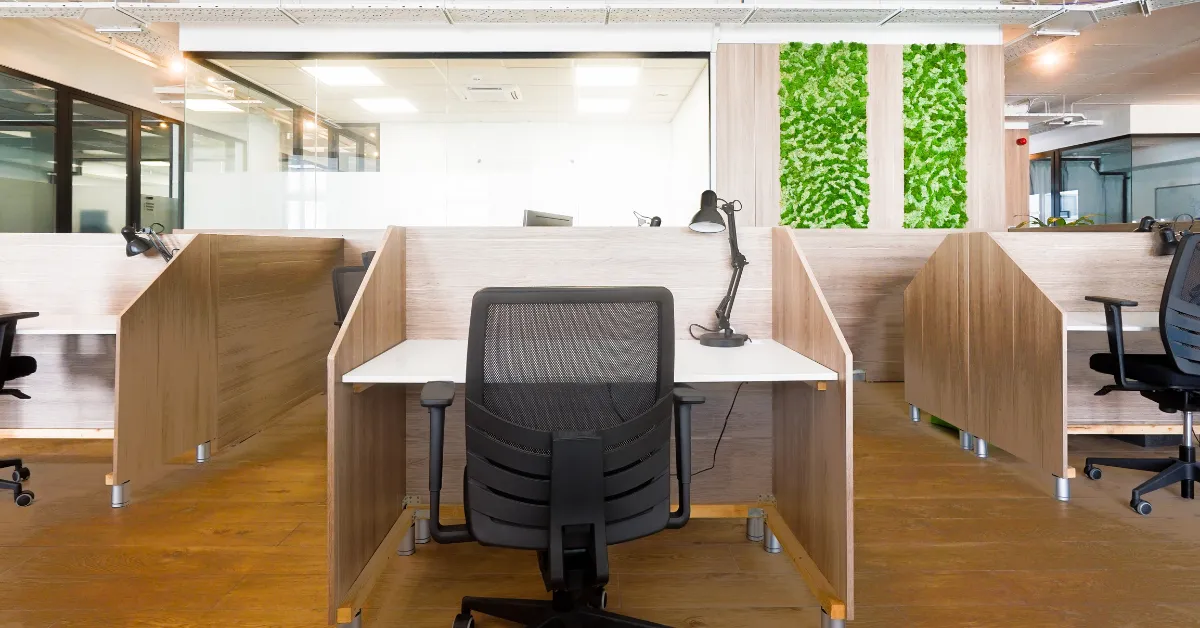
A Dedicated Desk at SOHO gives you a fixed external workspace from €350/month: your own desk, 24/7 access, and a professional environment without the cost or commitment of a private office. It is a practical option for people who want the structure of an office on a regular basis while retaining the flexibility of a membership.
For people who mostly prefer working from home but need an occasional office option, a Hot Desk is available from €30/day. It gives you access to SOHO’s workspaces in St. Julian’s and Gzira without a fixed monthly commitment.
The hybrid approach — some days at home, some days at a coworking space — addresses many of the disadvantages listed above without giving up the advantages.
Frequently Asked Questions
What are the main advantages of working from home?
Lower costs (no commute, no office rent), recovered commute time, schedule flexibility, and the ability to create a focused working environment for solo tasks. For business owners, the reduction in fixed overhead is significant.
What are the main disadvantages of working from home?
Social isolation, reduced motivation without external accountability, difficulty maintaining work-life boundaries, limited access to office equipment, and team coordination challenges. For employees, reduced visibility to management can also affect career progression. For business owners, the lack of a professional registered address is a practical consideration.
How do I get a professional business address if I work from home?
A Business Presence package provides a registered Malta address for company registration, banking, and correspondence without requiring you to rent an office. SOHO’s Business Presence packages start from €75/month and include mail handling.
Is a coworking space better than working from home?
It depends on your circumstances. Working from home works well for people with good self-discipline, a quiet dedicated workspace, and strong personal boundaries. Coworking suits people who benefit from external structure, value social contact, or find their home environment too distracting. Many professionals find that a hybrid approach — some days at home, some at a coworking space — provides the best of both.